Poetics
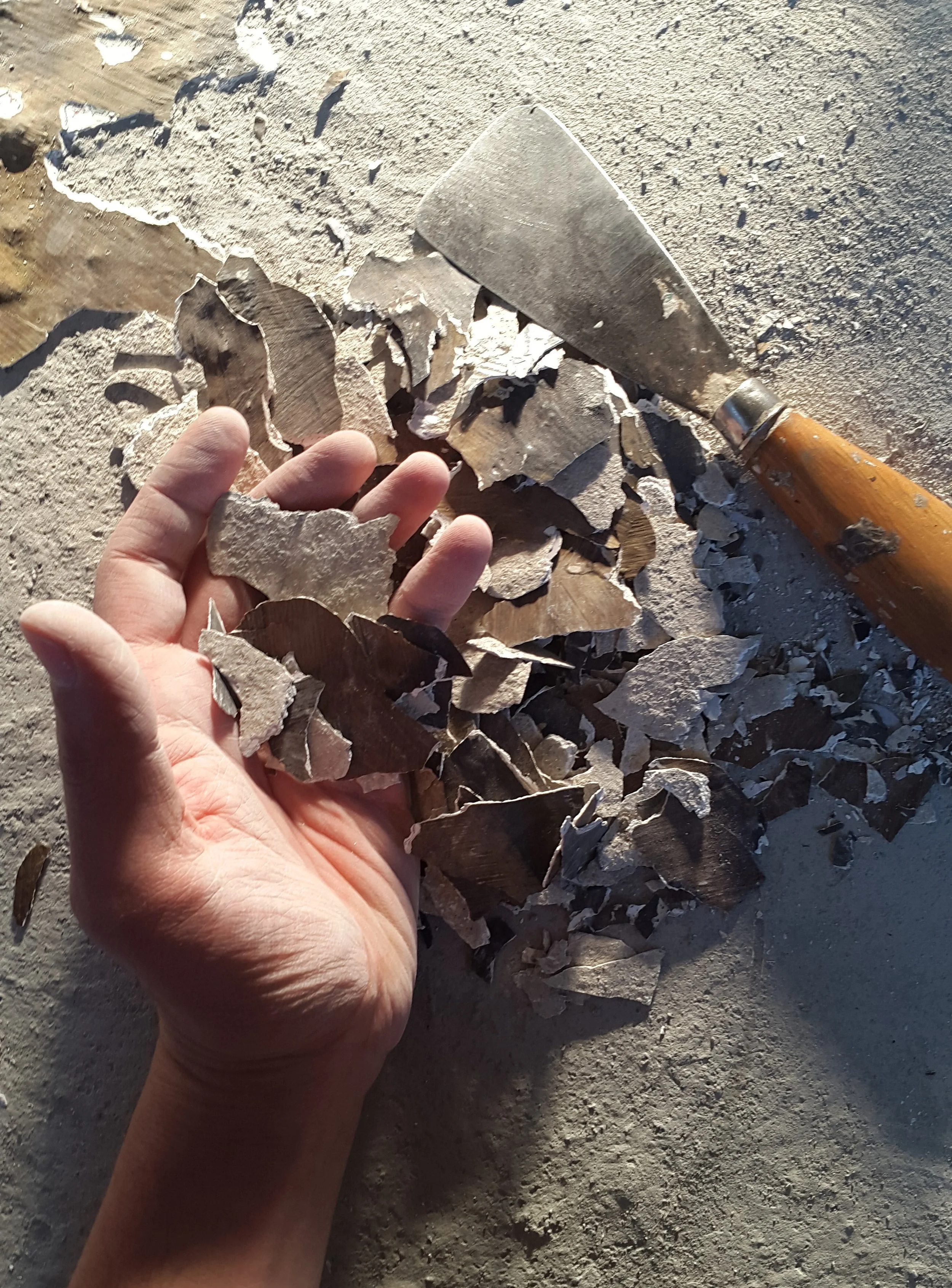
There are three aspects of existence found in all ancient cultures: the principles of Creation, Preservation, and Destruction.
I want to create a work that encompasses these three aspects within a single image: creation, through its visual dimension; preservation, through the choice of materials and the work's durability over time; and destruction, through the physical action of time and space on the artwork itself.
In the shifting cycles of nature, I find a continuous succession where these dimensions constantly interpenetrate one another.
Often, as I walk along woodland paths, I perceive the presence of the opposite season. In the depths of winter, you can already discern the signs of spring’s renewal; conversely, in the height of spring, the first subtle symptoms of winter’s decay begin to appear.
I want to capture this duality—to hold these opposing forces together in a single, unified space.
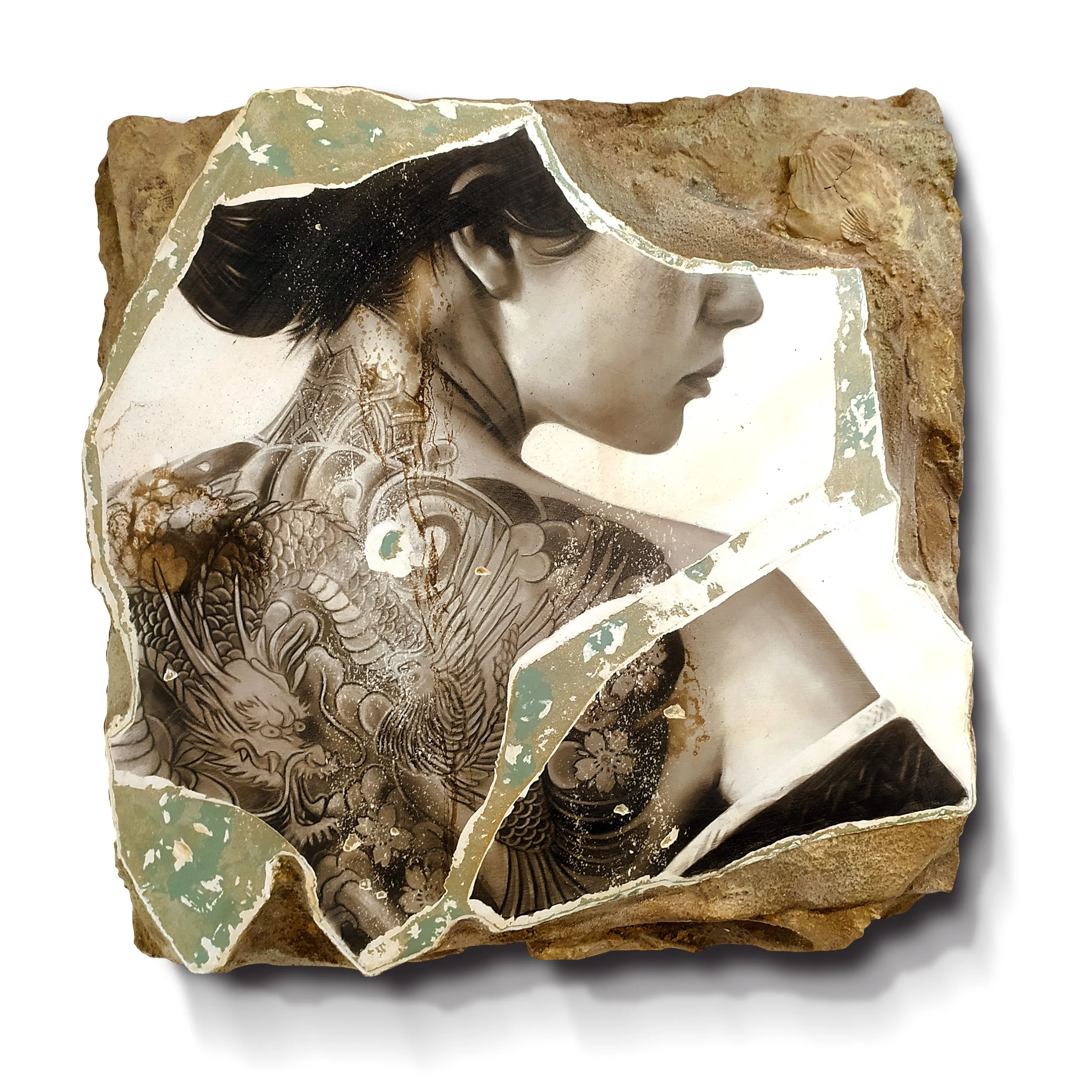
I strive for a radical, photographic realism—not as an end in itself, but as a functional tool. I believe that the contrast between this intense realism and the brutality of the crack creates a tension that holds the precise emotion I want to evoke: lasting beauty.
Beauty is an immanent form anchored within a transcendent dimension—that of life, of change, of the succession of lives after lives, day after day. I believe that once a form of beauty is born, it becomes fixed in a dimension of eternity, no longer subject to decay.
This is precisely what painting does: it forever suspends a changing form.
Being born, growing, dying... all captured in a single instant.
Technique
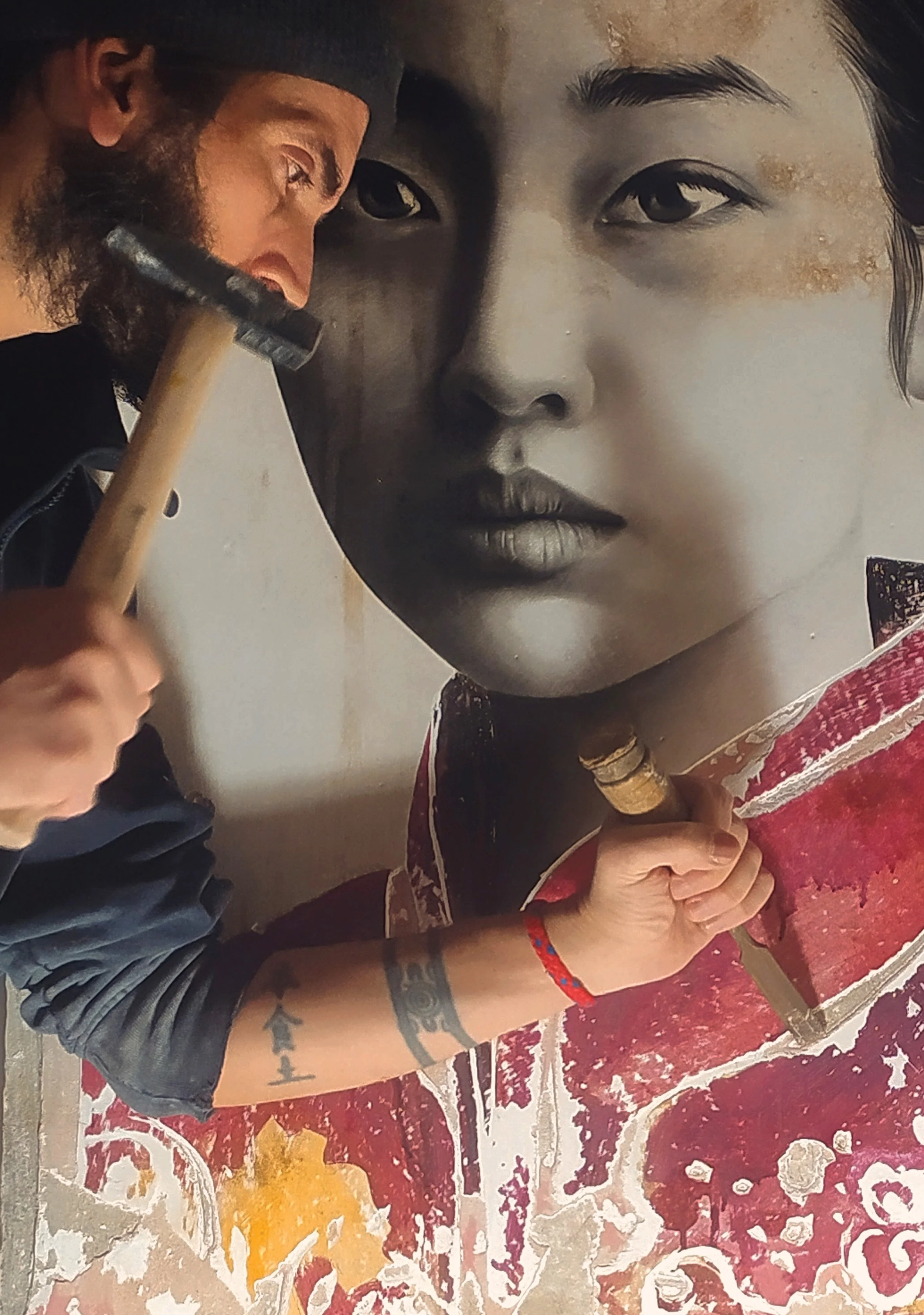
The paintings are created on cardboard covered with a thin layer of cement. A slow layering of tempera paint recreates the effect of a wall hypothetically repainted over decades, while the figures themselves are rendered using charcoal and bitumen glazes.
The final stage of the process is descialbo—an ancient restoration technique that literally means "to uncover," which involves removing layers of paint from the plaster using a hammer, spatula, or scalpel.
The resulting effect is that of a fresco recovered from beneath the rubble: portions of the painting remain pristine, while others are lost, marked by cracks, fragments, discolorations, and abrasions.
“What we call the beginning is often the end. And to make an end is to make a beginning. The end is where we start from.”
— T.S. Eliot (from "Four Quartets")